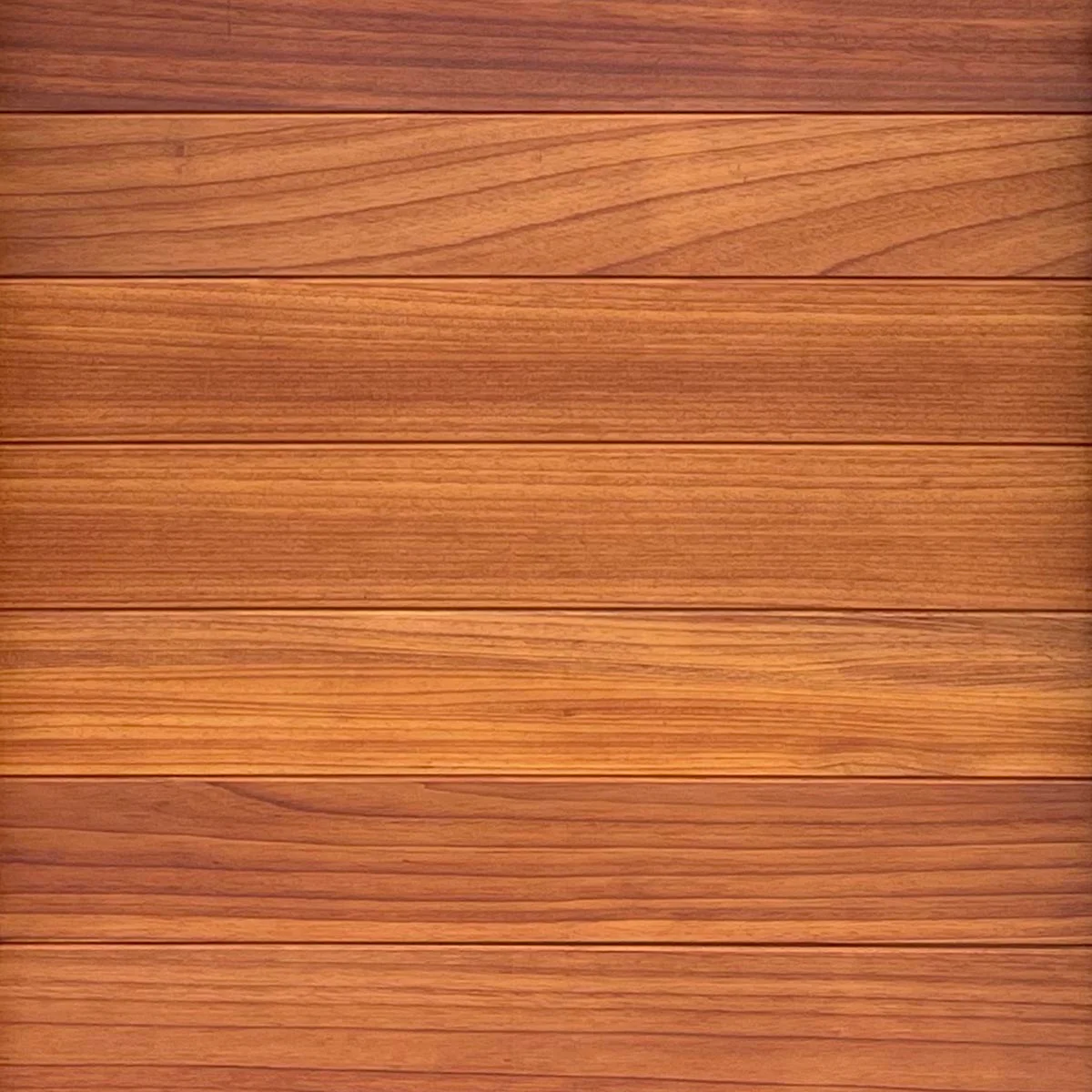
FIRE-RATED AMBARA FOR WUI ZONES
Ambara is Officially Recognized as WUI Approved with a CAL FIRE BML Listing
Ambara® has achieved an official California State Fire Marshal Building Materials Listing for Wildland-Urban Interface (WUI) applications. Tested and certified to CSFM 12-7A-1, Ambara® is fully compliant with Chapter 7A of the California Building Code for exterior wall siding in designated fire hazard severity zones.
HOW TO BUY
Verified fire performance for your WUI projects. Specify with Confidence.
Understanding California WUI Requirements
California's Wildland-Urban Interface (WUI) building requirements exist to protect homes and communities in areas where wildfire risk is the highest. Chapter 7A of the California Building Code establishes specific standards for exterior materials, including siding, that must be met in designated fire hazard severity zones.
For exterior wall siding, the relevant test standard is CSFM 12-7A-1, which evaluates how materials perform when exposed to direct flame contact simulating wildfire conditions. Products that pass this testing can be listed in the California State Fire Marshal's Building Materials Listing (BML) database, providing a straightforward way for building officials to verify compliance.
Verify our listing: Search for Nova USA Wood Products at calfire.govmotus.org/BMLSearch
Fire Rating Standards Explained
Fire testing standards can be confusing because different tests measure different things. Here's a quick guide to understanding what the various ratings mean:
ASTM E84 (Flame Spread Index)
This test measures how quickly flame spreads across the surface of a material. It's primarily used for interior wall and ceiling finishes. A Class A rating (flame spread index of 0-25) indicates excellent performance for interior applications, but this test doesn't evaluate how a material performs as part of an exterior wall assembly exposed to wildfire conditions.
CSFM 12-7A-1 (Exterior Wall Siding & Sheathing)
This California-specific test evaluates exterior wall assemblies under conditions that simulate wildfire exposure. A complete wall assembly (siding, sheathing, and framing) is exposed to direct flame from a 150 kW burner for 10 minutes, then monitored for 60 additional minutes. To pass, there must be no flame penetration through the assembly and no glowing combustion on the interior side.
CAL FIRE BML Listing
The Building Materials Listing is the California State Fire Marshal's official database of products that have been tested and approved for use in WUI zones. When a product is BML listed, building officials can verify its compliance directly in the database—simplifying the approval process for projects in fire hazard severity zones.
Ambara® has been tested to CSFM 12-7A-1 and is listed in the CAL FIRE BML database under Category 8140 (Exterior Wall Siding and Sheathing for WUI). Although our Thermally Modified Ambara® is produced from Ayous / Obeche hardwood, our modification process is proprietary. Ambara® is the only thermally modified Ayous product certified under this CAL FIRE BML listing for WUI compliance.
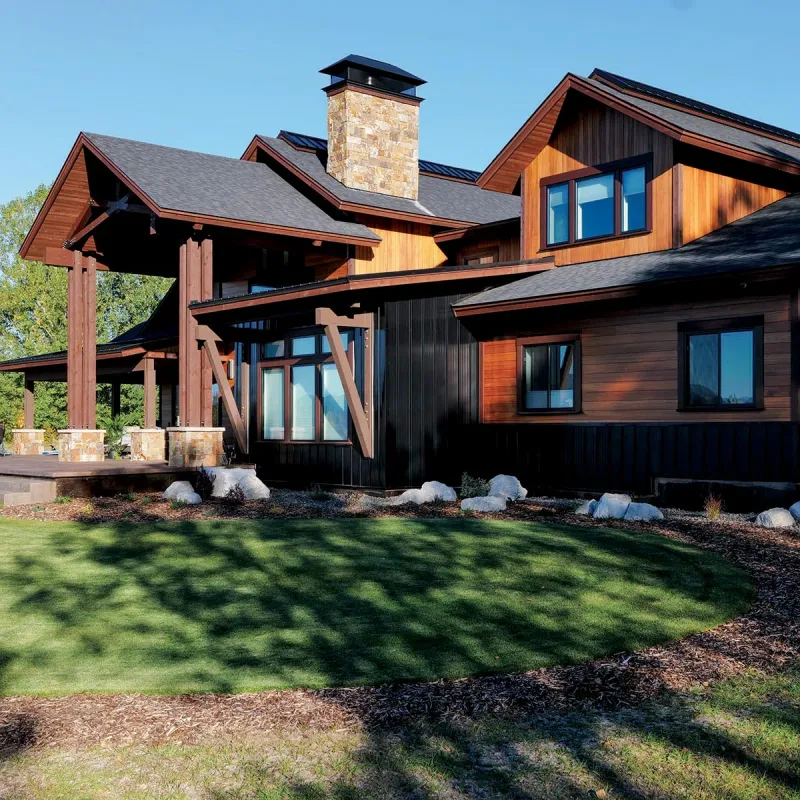
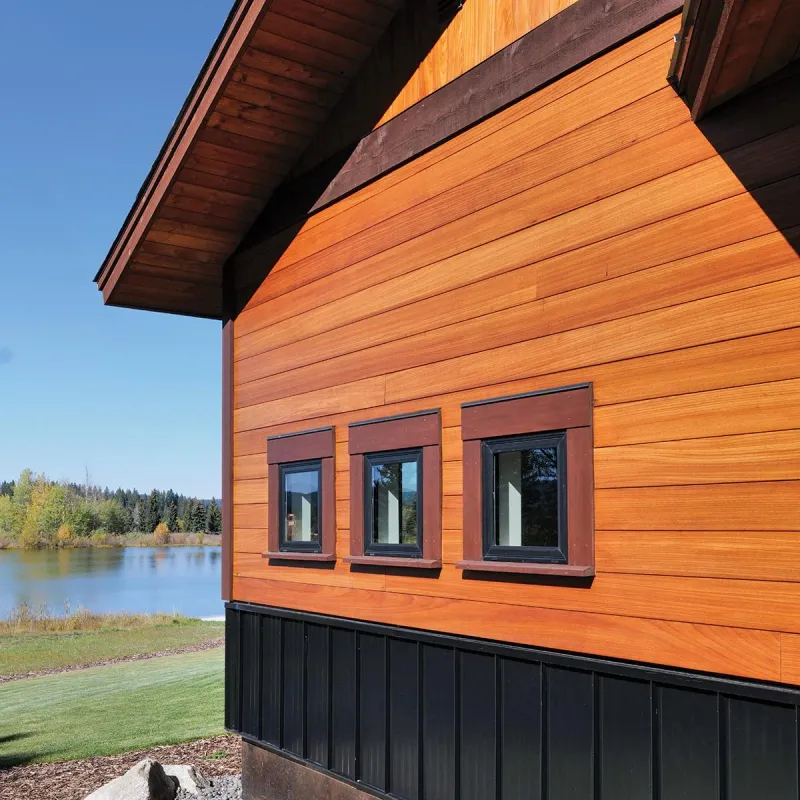
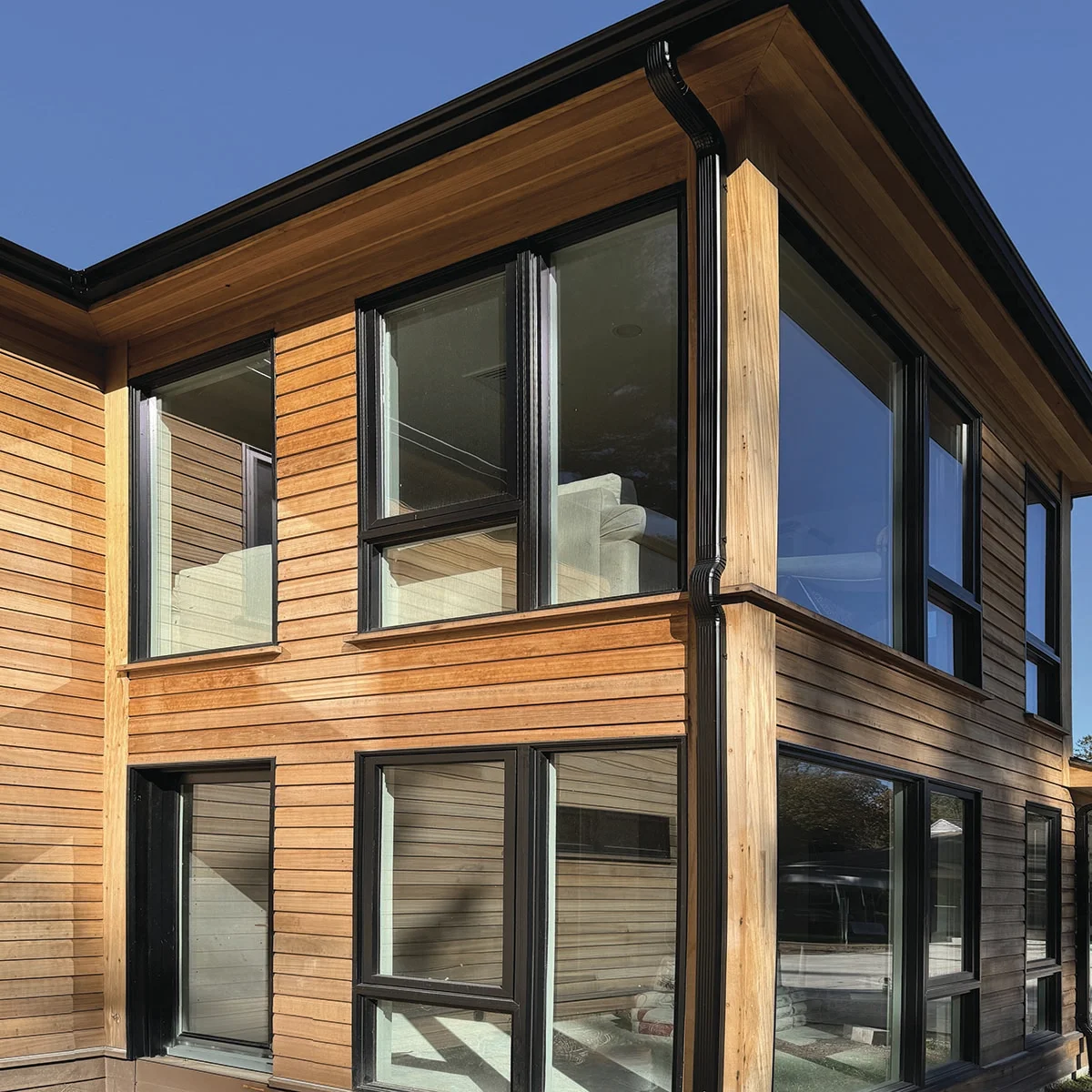
Certification Details
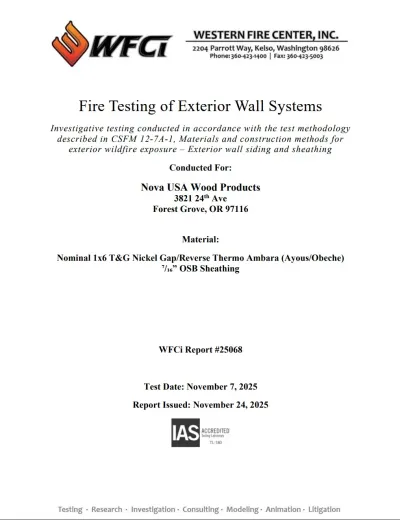
Listing No.: 8140-2377:0003 Test Standard: CSFM 12-7A-1 (Materials and Construction Methods for Exterior Wildfire Exposure – Exterior Wall Siding and Sheathing) Test Laboratory: Western Fire Center, Inc. (WFCi), Kelso, WA — IAS Accredited (TL-180) Test Report: WFCi Report #25068 (November 24, 2025) Rating: Compliance with Chapter 7A of the California Building Code BML Category: 8140 – Exterior Wall Siding and Sheathing for Wildland Urban Interface (W.U.I) Verification: calfire.govmotus.org/BMLSearch
Tested Assembly & Approved Profiles
Tested Configuration: Nominal 1×6 T&G Nickel Gap/Reverse Thermo Ambara (Ayous/Obeche) siding installed horizontally over 7/16" OSB sheathing on nominal 2×4 wood studs spaced 16" on center. Three replicate tests were performed per CSFM 12-7A-1 requirements, with all three tests passing—no flame penetration through the assembly and no glowing combustion on the interior surface at the end of the 70-minute test period.
Based on the test results, the certification extends to similar profiles per WWPA Standard Patterns and Redwood Lumber Patterns No. 17. The siding was tested with the nickel gap exposed to flames; the reverse (V-cut) orientation is also applicable.
WWPA Standard Patterns
Nominal Sizes: 1×6, 1×8, 1×10, 1×12
Paneling & Siding: WP-2, WP-4, WP-8, WP-10, WP-12, WP-14, WP-16, WP-18, WP-20
Siding: Pattern 116
Note: 1×4 profiles are not included in the certification.
Redwood Lumber Patterns No. 17
Nominal Sizes: 1×6 and wider
Tongue & Groove: 16, 17, 18
Shiplap: 633, 634, 633EE, 634EE
Bevel/Bungalow: 708, 715, 716, 708R, 715R, 716R
Channel Rustic: 616, 617
V-Joint/Nickel Gap: 711, 712, 713, 711R, 712R, 713R
Board & Batten: 733R, 734R
How the Test Works
The CSFM 12-7A-1 test is designed to evaluate how exterior wall assemblies perform when exposed to direct flame from a wildfire. A 4'×8' wall assembly is subjected to direct flame from a 150 kW gas burner for 10 minutes, then monitored for an additional 60 minutes. To pass, the assembly must show:
No flame penetration through the wall assembly
No evidence of glowing combustion on the interior surface at the end of the 70-minute test
Ambara passed all three replicate tests required by the standard. In each test, flames self-extinguished after the burner was turned off, and no signs of combustion (flaming, glowing, or smoking) were observed on the backside of the wall at the conclusion of testing.
Beyond Fire Performance
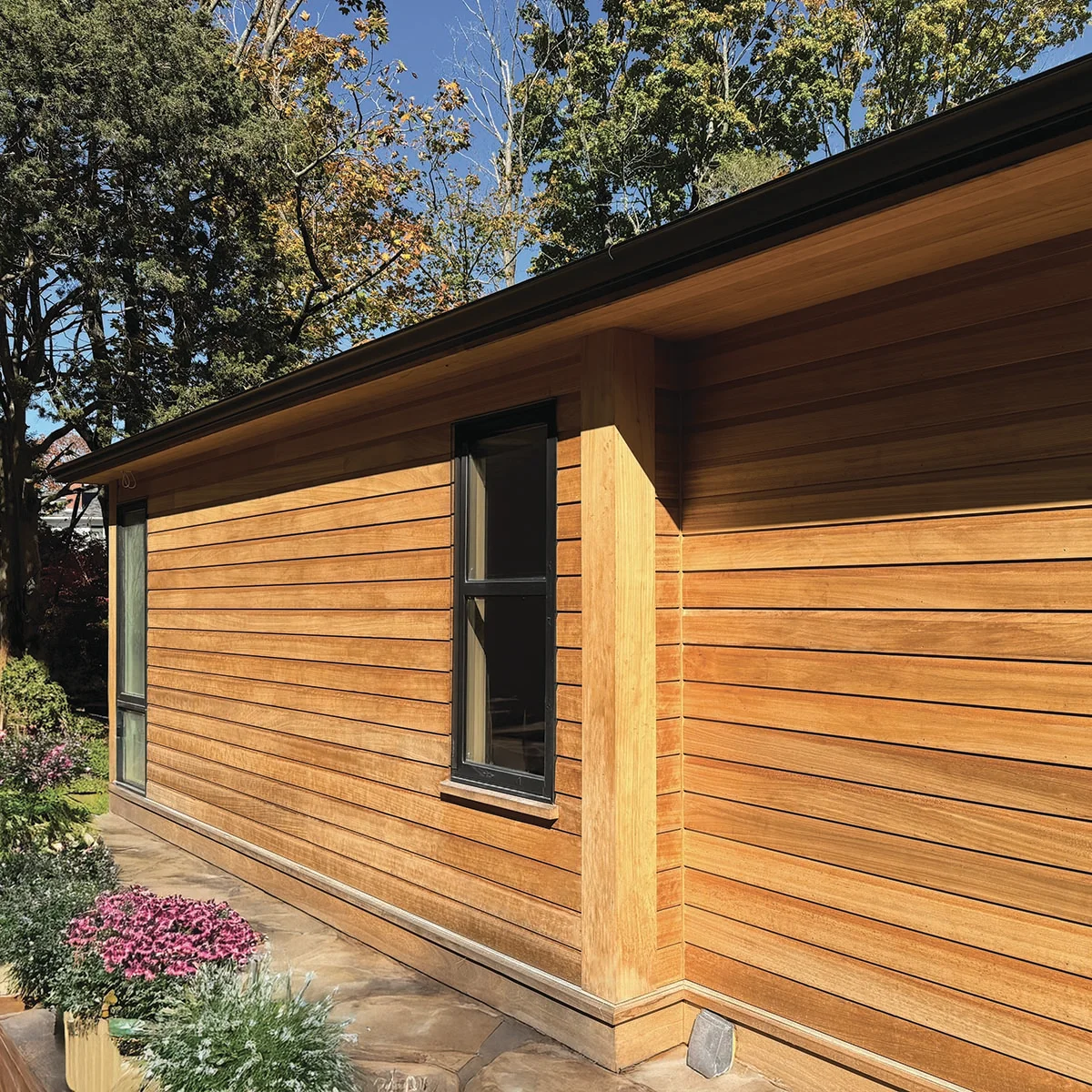
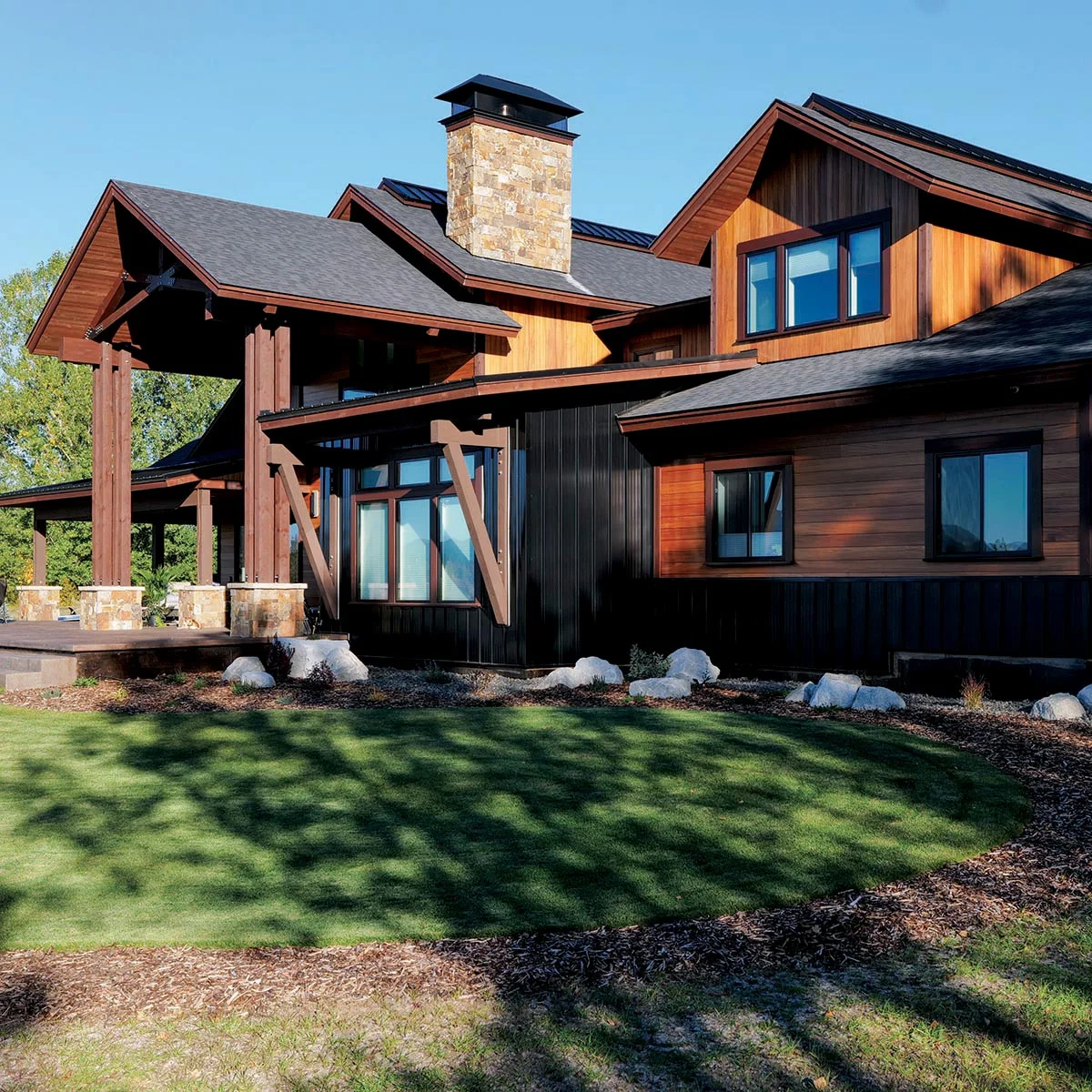
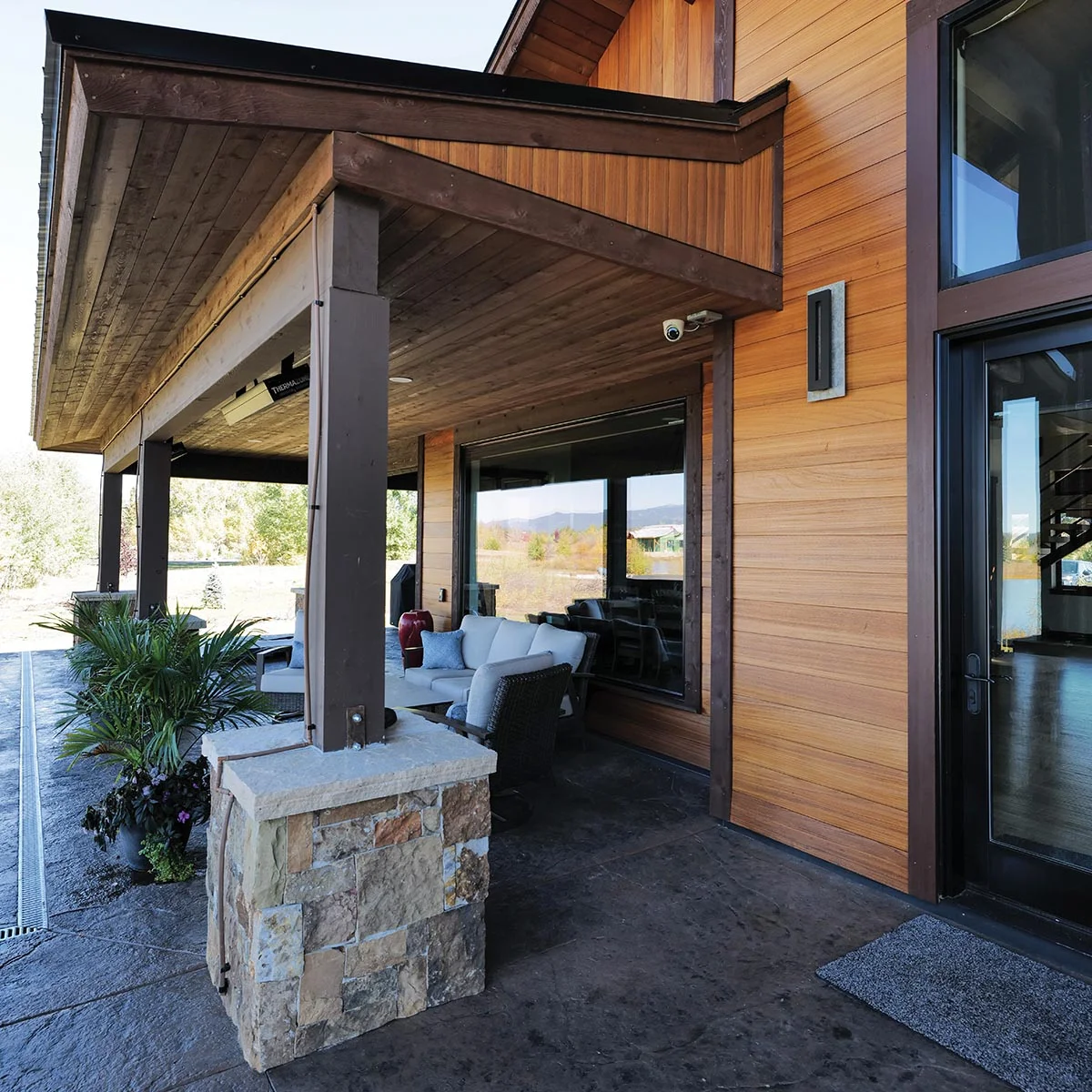
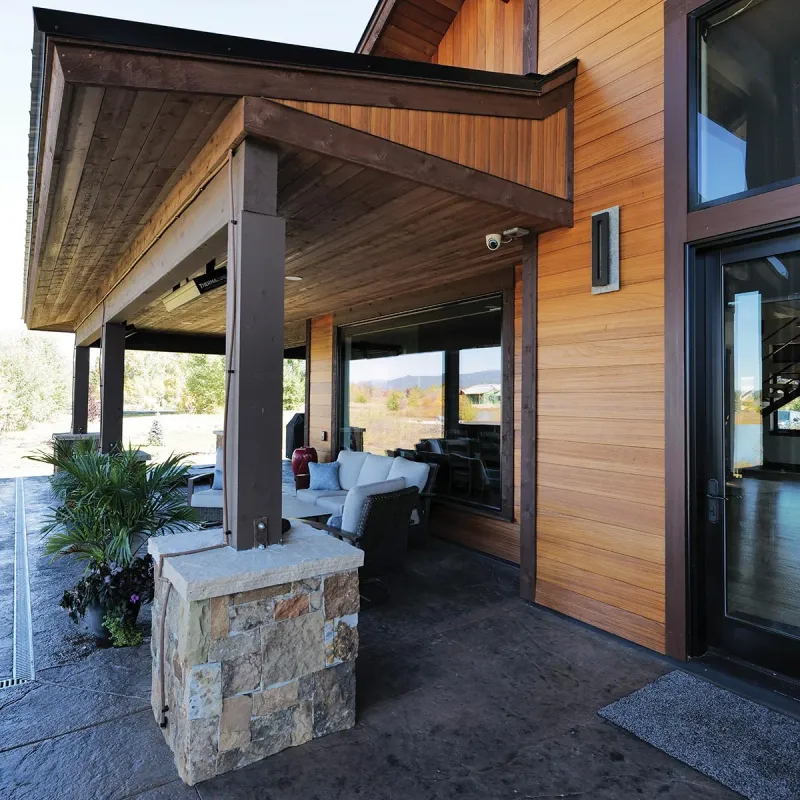
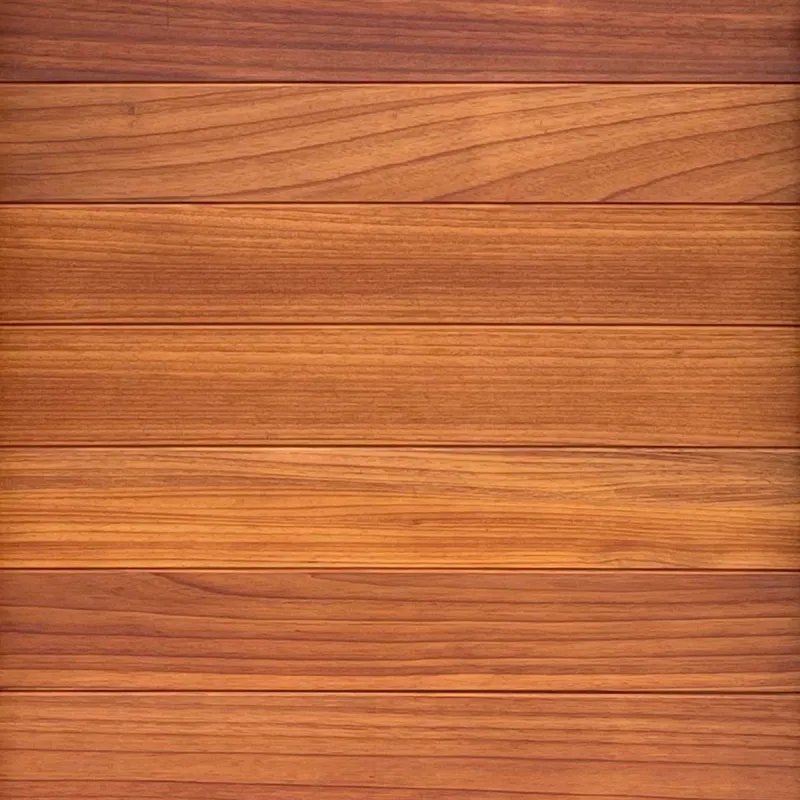
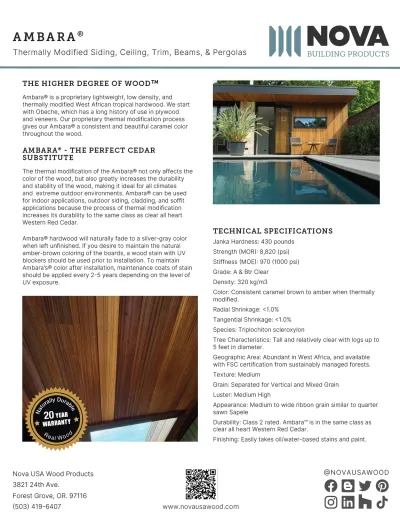
Ambara isn't just fire-compliant—it's a premium siding material in its own right. The thermal modification process transforms sustainably-sourced ayous into a dimensionally stable, decay-resistant hardwood with a rich caramel color. It won't warp, twist, or cup like untreated wood, and it's backed by Nova's 25-year warranty.
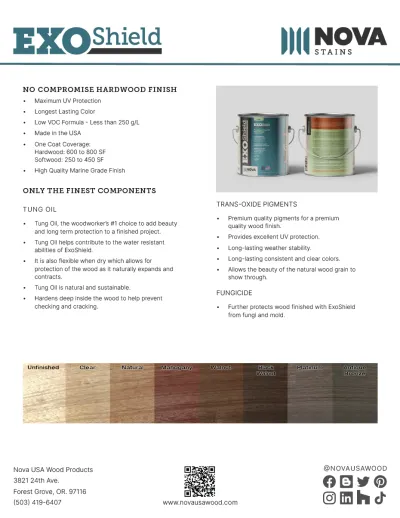
Lightweight and easy to work with, Ambara installs like Western Red Cedar but outperforms it in durability and stability. It accepts stains beautifully—pair it with ExoShield Wood Stain to maintain the warm brown tones, or let it weather naturally to a silver-gray patina.
About This Certification
The BML listing is based on testing conducted specifically on Nova's Ambara® thermally modified ayous. Because fire testing evaluates specific products and assemblies, this certification applies to Ambara products from Nova USA Wood Products and the assembly configurations described in the test report.
Technical Resources
Download the Ambara® CALFIRE WUI Listing: CALFIRE WUI 8140-2377:0003 (PDF)
Download the full WFCi Fire Test Report: WFCi Report #25068 (PDF)
Frequently Asked Questions
What is the difference between ASTM E84 and CSFM 12-7A-1?
ASTM E84 measures flame spread across material surfaces and is used primarily for interior finishes. CSFM 12-7A-1 is a California-specific test that evaluates complete exterior wall assemblies under simulated wildfire conditions. They measure different things for different applications—a product might perform well on one test but not be evaluated for the other.
Where can I verify Ambara's fire rating?
Search for Nova USA Wood Products in the California State Fire Marshal's Building Materials Listing database at calfire.govmotus.org/BMLSearch.
What siding profiles are included in the certification?
The certification covers horizontal siding installations in nominal 1×6 and wider dimensions using approved profiles from WWPA Standard Patterns and Redwood Lumber Patterns No. 17. See the Approved Profiles section above for the complete list.
Does this certification apply to other thermally modified wood products?
No. The BML listing is based on testing of Nova's Ambara® thermally modified ayous specifically. Other thermally modified products would need to undergo their own testing to obtain a listing.
What about vertical siding installations?
The current certification covers horizontal siding installations, which is what was tested. Contact Nova for guidance on vertical applications and alternative compliance paths for your specific project.
Can this certification be used outside of California?
The BML listing is California-specific, but the underlying CSFM 12-7A-1 test data may be useful for demonstrating fire performance in other jurisdictions. Some states and local authorities reference California's Chapter 7A standards or accept similar testing. Check with your local building official for requirements in your area.
What wall assembly was tested?
The tested assembly consisted of Ambara siding installed horizontally over 7/16" OSB sheathing on nominal 2×4 wood studs spaced 16" on center. Refer to the WFCi test report and Nova's installation instructions for complete details.
HOW TO BUY
Need help with a WUI project? See how we can help.