
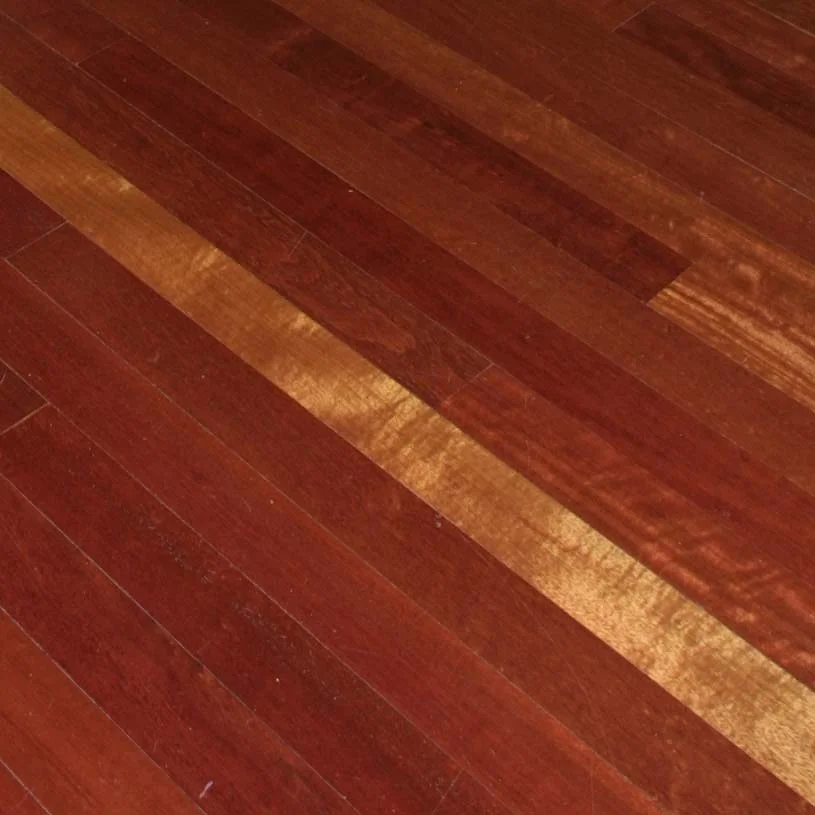
Purpleheart Hardwood Technical Species Information
Detailed scientific and mechanical properties for Purpleheart Hardwood Lumber
Purpleheart
The breathtaking coloring that has made Purpleheart world famous occurs when its freshly cut brown heartwood is exposed to the air, rapidly turning deep purple. Over time, prolonged exposure to light causes the heartwood to slowly transition from purple to a rich, dark brownish-purple shade. Purpleheart also possesses complimentary tones that can range from pale pink to whitish-grey. Purpleheart is very popular not only because of its amazing color, but also for its high level of durability. This wood serves as stunning decorative accent to any room and is sure to catch the admiring eye of any visitor.
Purpleheart Wood Properties
- Janka Hardness
- 1,860 lbf
- Modulus of Rupture (MOR)
- 21,300 psi
- Modulus of Elasticity (MOE)
- 2,420 ×1000 psi
- Density
- 1,050 kg/m³
- Tangential Shrinkage
- 6.1%
- Radial Shrinkage
- 3.2%
- Botanical Family
- Leguminosae
- Distribution
- Central America, Latin America, Oceania and S.E. Asia
- Other Names
- Peltogyne spp, Amaranth, Nazareno, Pau Roxo, Bois Violet, Barabou
Purpleheart Characteristics
Color
Heartwood is purple and dark brown. Sapwood is white to yellow.
Texture
Fine to medium
Grain
Straight to interlocked
Luster
Lustrous
Durability
Rated as very durable and resistant to termites.
Drying
Dries at slow speed with slight risk of surface checking and end splitting.
Workability
Rated as moderately difficult to work
Applications
Flooring, decking, decorative veneers, bridge joists, boat building, fine furniture, tables
Photosensitivity
Moderate
Purpleheart is one of the most durable and stable species of hardwood available. Although striking in color, Purpleheart can be stained to appear more red-brown and less purple-pink. Fantastic for interior flooring, exterior decking and industrial uses.