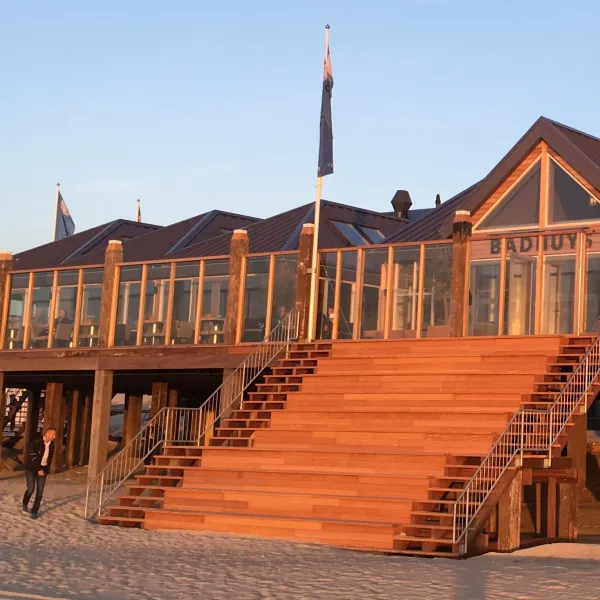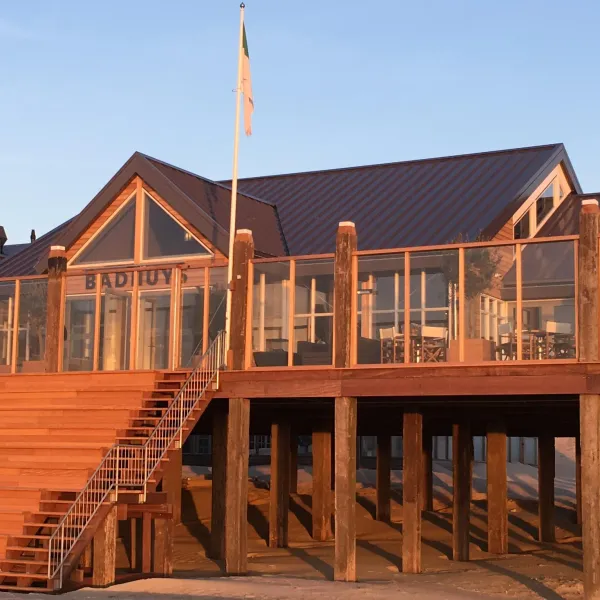
Angelique is a well known timber often used in marine applications.
Angelique, Basralocus
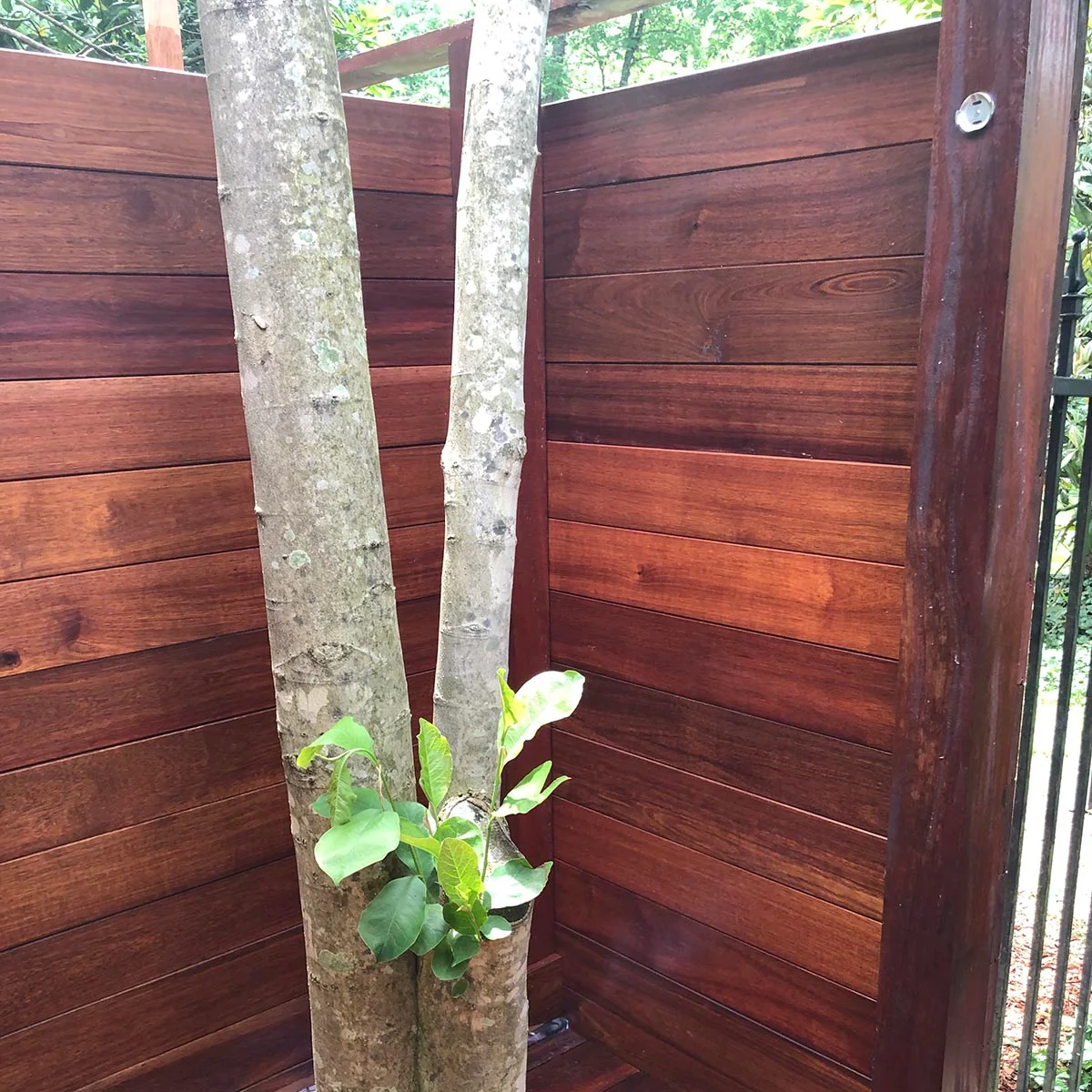
Heartwood reddish-brown-gray to reddish- or yellowish-brown sharply demarcated from narrow brownish-white sapwood. Texture medium; unusual subsurface luster; grain usually straight, sometimes somewhat interlocked; no distinctive odor or taste. Vessels are prominent as long brown lines on side grain producing an attractive figure. Silica content reported 0.20 to 1.70% and as high as 2.92%.
Angelique Wood Properties
- Janka Hardness
- 1,290 lbf
- Modulus of Rupture (MOR)
- 17,390 psi
- Modulus of Elasticity (MOE)
- 2,190 ×1000 psi
- Density
- 650 kg/m³
- Tangential Shrinkage
- 8.2%
- Radial Shrinkage
- 5.1%
- Botanical Family
- Fabaceae-Caesalpinioideae (angiosperm)
- Tree
- Well-formed tree to a height of 150 ft and diameters to 5 ft but more commonly to 3 ft. Boles are clear for 60 to 80 ft over heavy buttresses.
- Distribution
- Abundant in eastern Surinam and western French Guiana where it may make up 10% of the forest stands. Best growth on deep, loamy, well drained soils of lowland plains but also found in wet areas.
- Other Names
- Dicorynia guianensis, Dicorynia paraensis, Angelica do Para, Tapaiuana, Barakaroeballi, Basralokus
Angelique Characteristics
Color
Color turns bronze brown or purplish brown with air. Sometimes, presence of internal stresses. Sap is clearly demarcated.
Texture
Medium texture
Grain
Straight grain
Luster
Unusual sub-surface luster
Durability
Heartwood is resistant to very resistant to attack by decay fungi but is somewhat susceptible to dry-wood termites. The wood is resistant to attack by marine borers.
Drying
Moderately difficult to season, dries rapidly but with a tendency to moderate checking and slight warping. Reported to hold its place well after manufacture. Heartwood quite resistant to moisture absorption.
Workability
Working properties vary according to density and silica content but generally works well and finishes smoothly. Specially tipped cutters are suggested particularly for dried wood. Glues well.
Applications
Marine construction and general heavy construction, railroad crossties, industrial flooring, ship decking, planking, and framing, piling, parquet blocks and strip.
Photosensitivity
Yes
Basralocus, also known as Angelique, is a fairly large species of tree found in Guyana, French Guyana, Surinam and Brazil. A versatile hardwood, Angelique can be used for both interior and exterior applications and is especially popular for use in decking and marine construction. The wood is dimensionally stable and has a nice, warm, caramel brown color.
Basralocus, also known as Angelique, is a fairly large species of tree found in Guyana, French Guyana, Surinam and Brazil. A versatile hardwood, Angelique can be used for both interior and exterior applications and is especially popular for use in decking and marine construction. The wood is dimensionally stable and has a nice, warm, caramel brown color.
Angelique Products
View all in catalog →