
Western Red Cedar Lumber Technical Species Information
Detailed scientific and mechanical properties for Western Red Cedar Softwood Lumber
Western Red Cedar
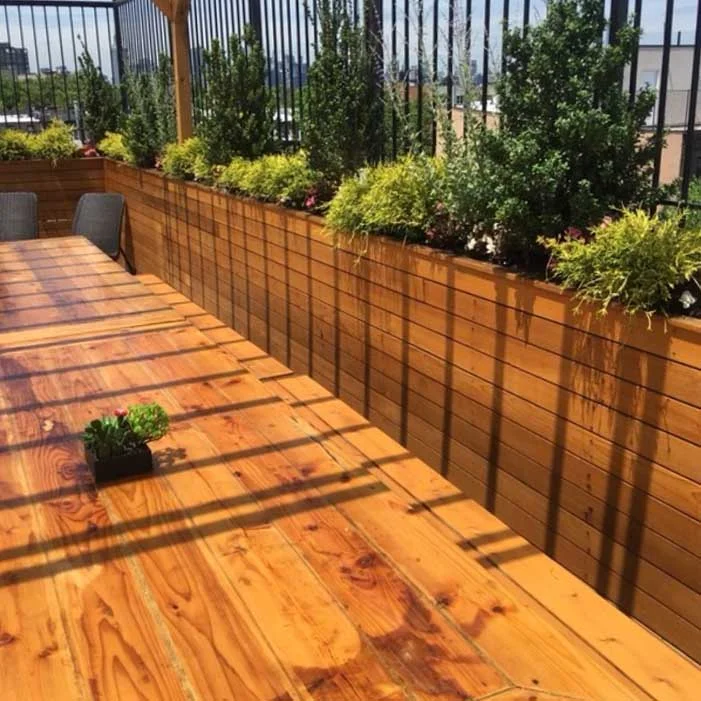
Western Red Cedar is a popular softwood that sports cozy colors ranging from soft burnt sienna to creamy yellows. These tones give the wood a very rustic feel that makes it seem as if it specifically created to reflect the warm glow of a nearby fireplace. Western Red Cedar is also known for having an even and fine grain. Great for creating a cozy country look, Western Red Cedar is sure to add a feeling of warmth and comfort to any room.
Cedar Wood Properties
- Janka Hardness
- 350 lbf
- Modulus of Rupture (MOR)
- 7,500 psi
- Modulus of Elasticity (MOE)
- 1,110 ×1000 psi
- Density
- 410 kg/m³
- Tangential Shrinkage
- 5%
- Radial Shrinkage
- 2.4%
- Botanical Family
- Cupressaceae
- Tree
- The Western Red Cedar tree can grow up to 100 feet high
- Distribution
- United States and Canada
- Other Names
- Thuja plicata, Cypress, Oregon Cedar, Giant Cedar, Arborvitae, British Columbia cedar, Canoe cedar, Pacific red cedar, Shinglewood, Giant arborvitae
Cedar Characteristics
Color
Heartwood is reddish-brown with a white to yellow sapwood.
Texture
Coarse to medium
Grain
Straight
Luster
Medium
Durability
Rated as durable, moderately resistant to termites.
Drying
Moderate drying speed, very slight risk of checking, distortion or collapse.
Workability
Rated as easy to work
Applications
Decking, flooring, furniture, boat building, decorative veneers, plywood
Photosensitivity
Moderate