
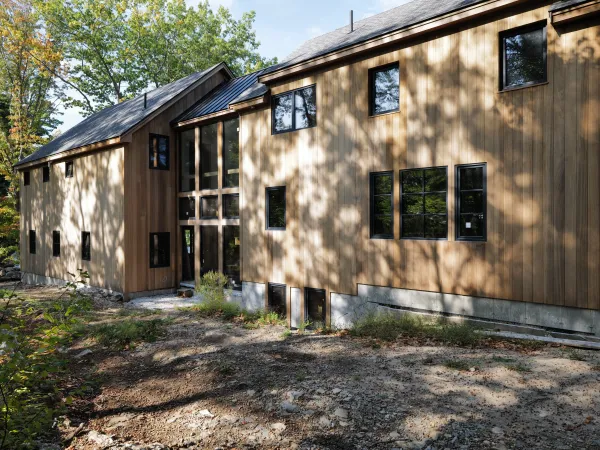
Thermally Modified Woods - How are they different?
This article highlights the key differences between thermally modified wood and regular kiln dried wood
Steve Getsiv · September 26, 2026
Steve Getsiv · November 12, 2026
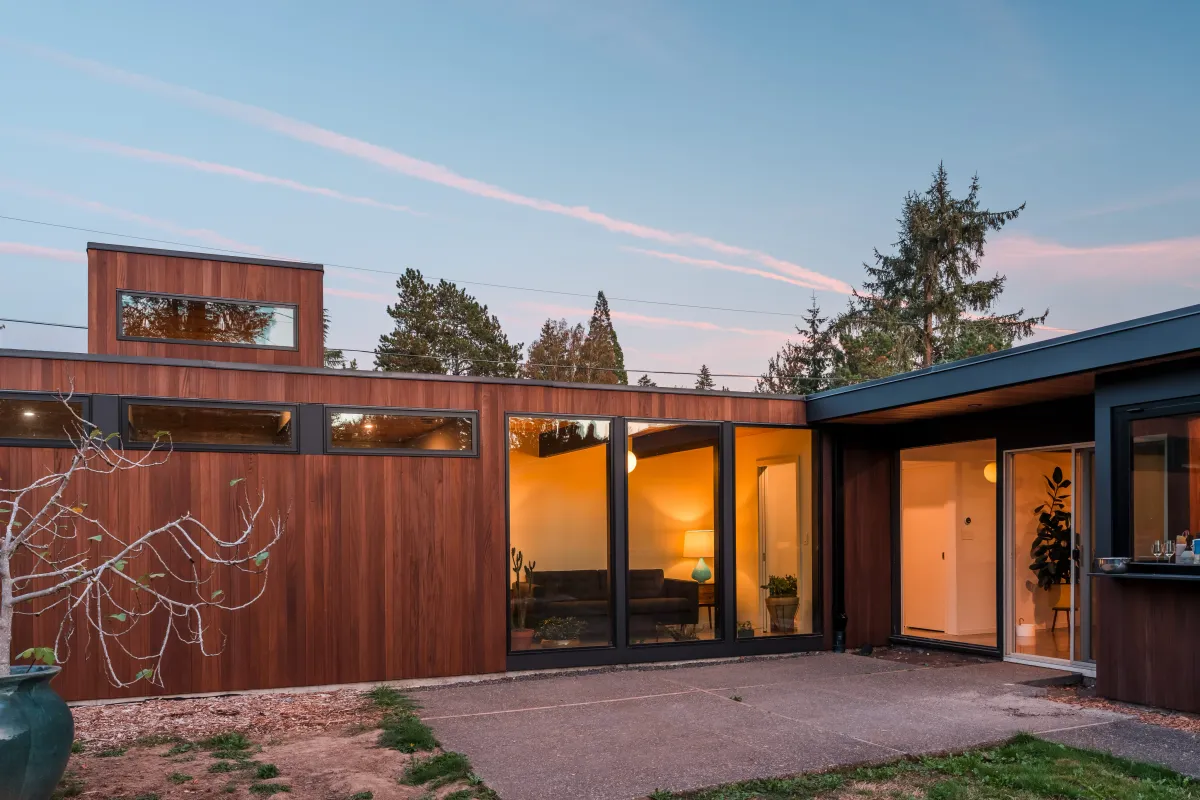
Exterior siding takes a beating. Rain, sun, humidity swings and seasonal temperature changes all work on the wood, year after year. Natural wood gives you grain, warmth and design freedom that no composite can match, but moisture and movement are what cause most siding problems.
Here at Nova, we get a lot of questions from architects and contractors about thermally modified wood as an alternative to conventional siding, especially as clear Western Red Cedar gets more expensive and harder to find. We carry two thermally modified siding species, Ambara® and Inari™. Here's what to look at when you evaluate them for your project: performance, appearance and installation.
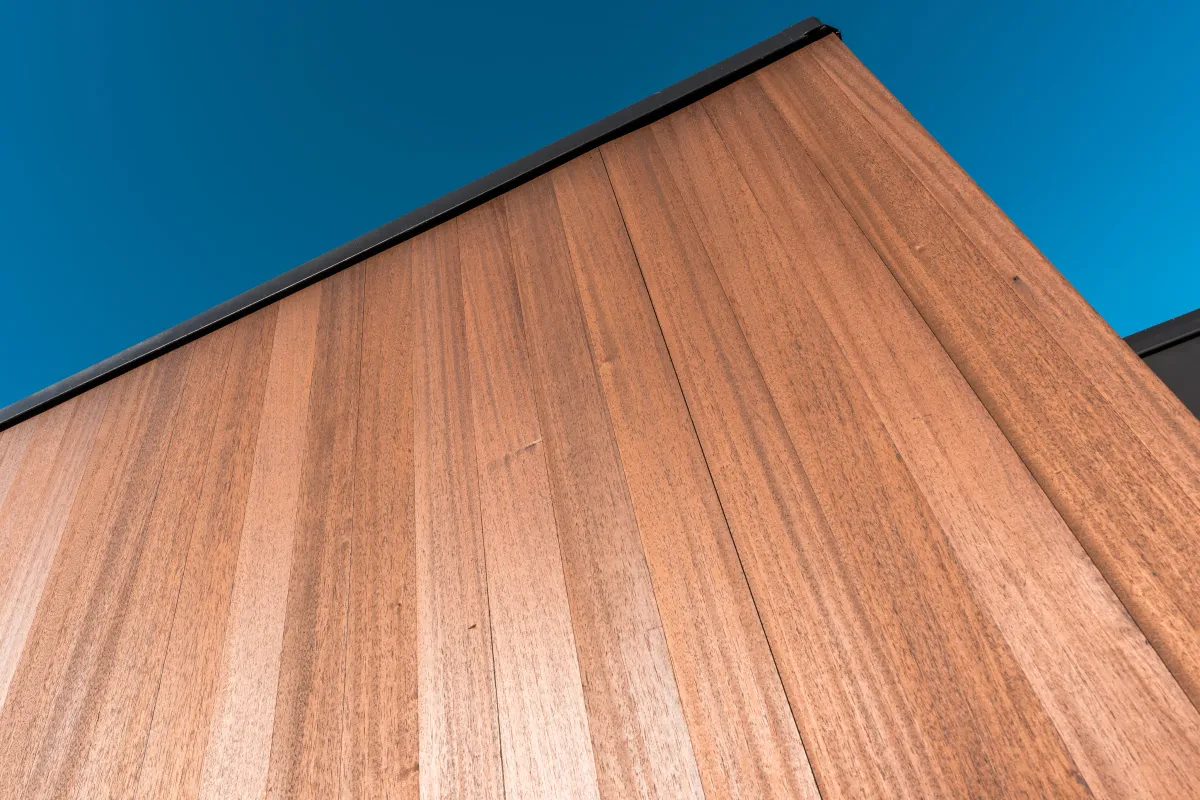
Thermal modification heats lumber to between 180°C and 230°C (356°F to 446°F) in a controlled, oxygen-free environment, protected by steam. No chemicals, no preservatives. The heat breaks down the hemicellulose in the wood, which is the part that soaks up moisture and feeds decay fungi. The result is wood that absorbs far less water and resists rot much better than the untreated species.
Unlike a surface treatment, the change goes all the way through the board, and so does the color. That said, the starting species and the process still make a big difference to the finished product:
For a deeper dive, see our guide to thermally modified wood.
All wood swells when it picks up moisture and shrinks when it dries out. On a wall, that movement shows up as gaps, cupping, and boards working loose around fasteners. Thermal modification cuts down how much moisture the wood cells can absorb, so it moves a lot less.
The numbers tell the story. Ambara® moves less than 1% in thickness and width, about four times less than Western Red Cedar, which is itself known for stability and moves around 4%. Inari™ is under 2%. Stable wood still needs proper spacing and moisture management, but it is far more forgiving on an exterior wall.
Western Red Cedar has been the go-to siding wood for generations because of its natural decay resistance, good looks and light weight. The problem is that clear, vertical grain cedar is increasingly scarce and expensive. Thermally modified wood gives you another option, especially when stability and a consistent appearance matter most.
Ambara® is our answer to the cedar shortage. It offers a clear, knot-free look comparable to A&Btr VG Western Red Cedar, with better stability, at a more accessible price point. Inari™ delivers the fine, even grain of spruce with Class 2 durability and a 25-year warranty.
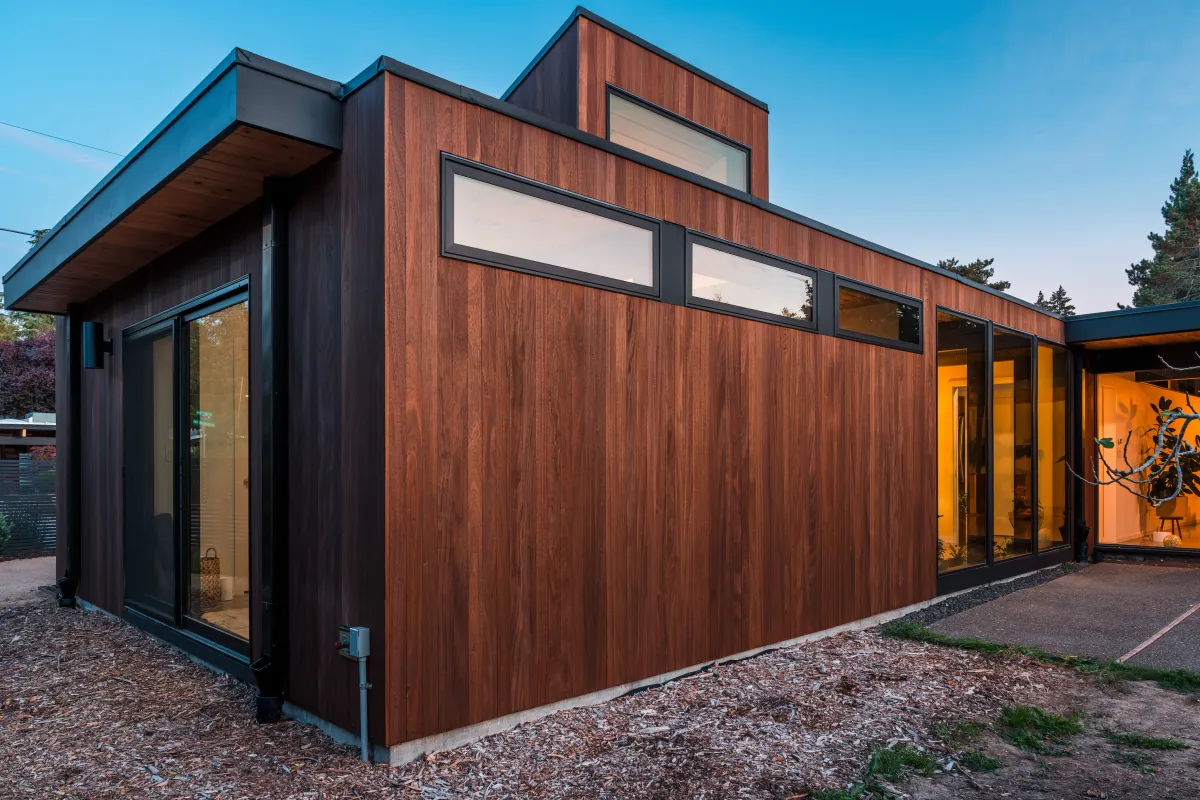
We offer both a Clear grade and an Appearance grade in our thermally modified wood products.
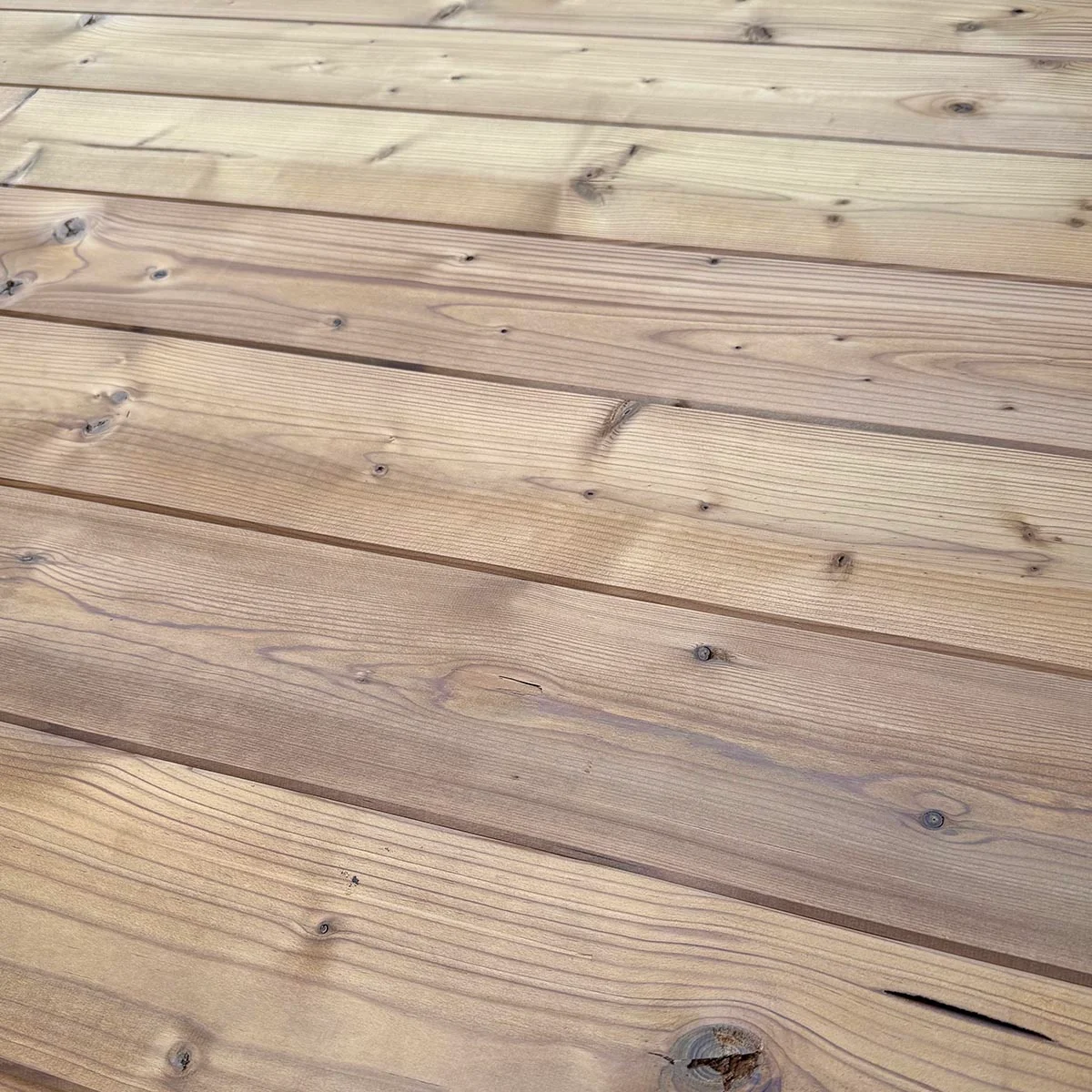
Our advice: get samples and study our application photos. Seeing the color and grain variation in person gives your project team the best sense of the finished wall before you order.
Siding sees moisture, and moisture invites fungi, especially where water doesn't drain well. Thermal modification removes the food source decay fungi rely on, which greatly improves biological durability. Inari™ carries a Class 2 durability rating, equivalent to all-heart Western Red Cedar, and Ambara® is raised to Class 2 as well, the same durability class as our tropical hardwoods like Batu and Bangkirai.
That said, nothing is immune. Standing water, poor ventilation and bad installation will still cause problems in any wood wall. And while thermally modified wood resists rot, it is not insect-proof. See our article on protecting thermally modified wood from pests.
The profile sets the look of the finished wall and how the boards fit together. Bevel siding creates overlapping horizontal courses. Tongue-and-groove, shiplap and nickel gap give you clean joint lines. Rainscreen profiles work with ventilated wall assemblies that manage water behind the cladding.
Ambara® is lightweight and lower in density, so it belongs on walls, soffits, trim and other vertical or non-structural work. It is not a decking or structural material.
Better stability doesn't mean you can ignore water. Rain gets into joints and collects around windows and other penetrations. Good flashing, drainage, and a weather-resistant barrier keep that water away from the building. Don’t forget to end seal all fresh cut ends so your boards don’t wick moisture.
A rainscreen assembly adds a drainage and ventilation gap behind the siding so moisture can escape. With bevel siding, we recommend a dimpled house wrap that keeps air moving behind the boards. Either way, follow the installation requirements for ventilation, fastening, spacing and clearances.
Thermal modification makes wood slightly more brittle than untreated lumber, so handle it with care and plan your fastening accordingly:
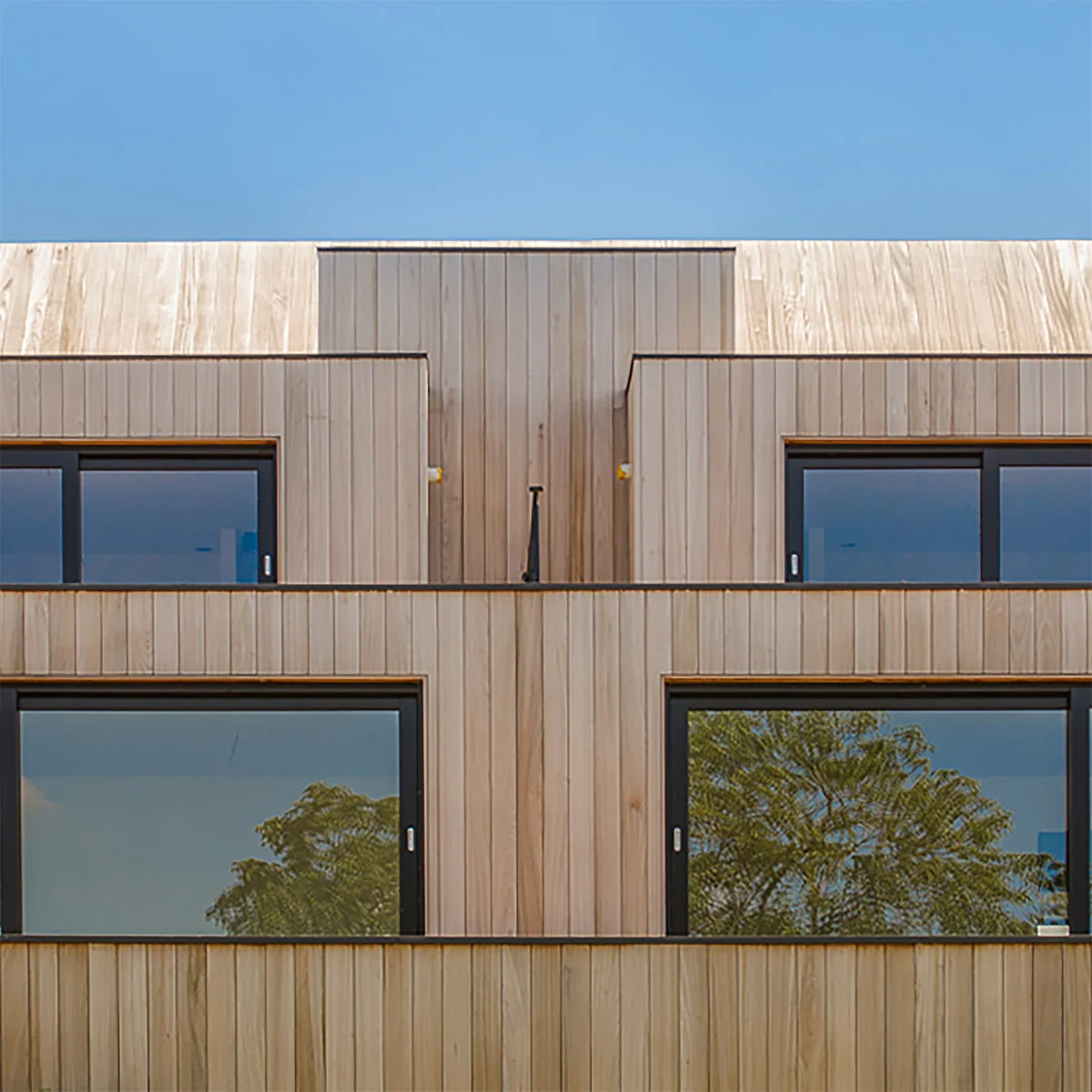
Left unfinished, thermally modified siding will weather to a natural silver-gray, just like cedar. If you want to keep the warm brown color, use a UV-protective finish such as ExoShield Wood Stain, our tung oil-based exterior finish. It penetrates deeply into the open cell structure of thermally modified wood. Plan on reapplying every 3 to 5 years depending on exposure.
Ambara® takes stain and paint beautifully. Because it absorbs readily, apply it carefully to get an even finish, and test on a sample board first. Inari™ accepts compatible oil- and water-based stains and paints.
Protect the boards from rain and long sun exposure while they're stored on site, and let them acclimate before installation. Thermally modified wood has much less movement than conventional lumber, but it still needs care. Seal every field-cut end, because the end grain is where moisture gets in.
The right siding comes down to matching the material to the building's design, its exposure, and how much maintenance the owner is ready for. Ambara® gives you a clear, cedar-like hardwood look with outstanding stability. Inari™ gives you an appearance grade STK thermally modified spruce with Class 2 durability, a 25-year warranty and the widest choice of profiles.
Nova USA Wood is a premium specialty wood supplier with warehouses on the West Coast and East Coast. We help architects, contractors and distributors with species selection, siding profiles, finishing and more. Contact us to talk through your project, or send us an architect inquiry for samples and specifications.
This article highlights the key differences between thermally modified wood and regular kiln dried wood
Steve Getsiv · September 26, 2026
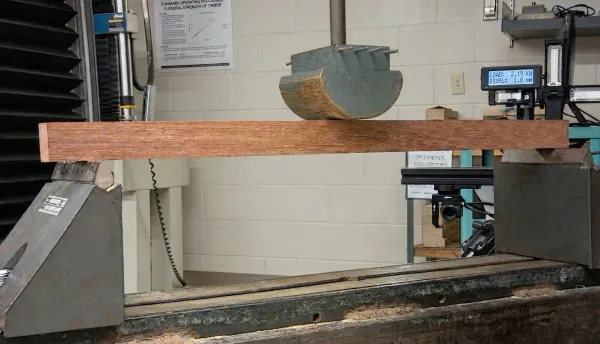
Mechanical testing on Ipe, Batu, Torem, and Bangkirai including modulus of rupture and elasticity, janka hardness and density
Micah Sutfin · February 28, 2026
This articles discusses moisture management in trailer floors and how to protect them from failure. NovaSeal is Nova's new water-based industrial floor sealer.
Micah Sutfin · October 24, 2025